
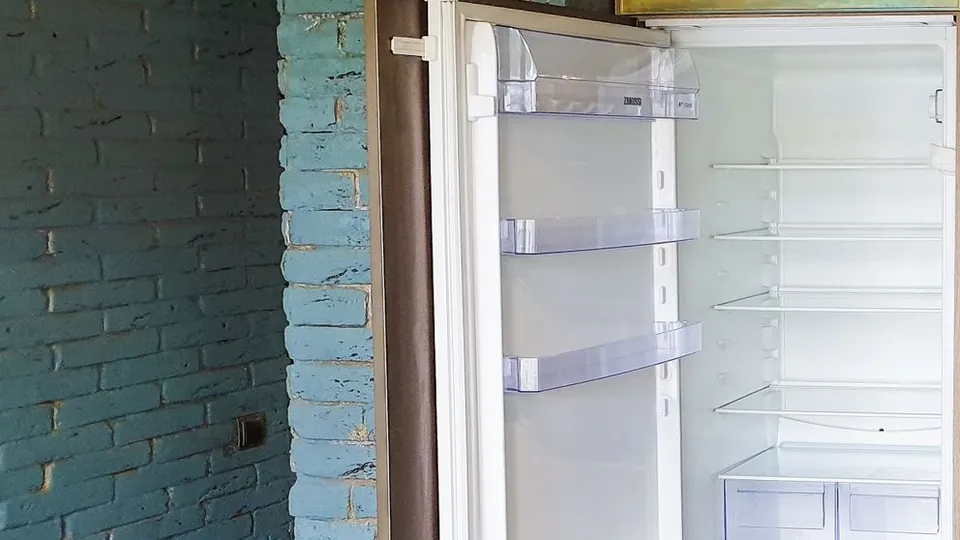
Why a separate freezer fails differently
A kitchen refrigerator-freezer is in a conditioned room and opened constantly, so people notice quickly when it misbehaves. A chest or upright freezer in a garage or utility room can quietly drift warm for days before anyone opens it. That is why freezer problems tend to be discovered late, and why the first question to ask is not "how do I fix this" but "what is safe to keep."
The USDA's general guidance for a power loss is that a full freezer holds its temperature for about 48 hours if the door stays shut (about 24 hours if half full). If frozen food still has ice crystals or is at 40°F or below, it can usually be refrozen, though quality may suffer. When in doubt, check with a thermometer rather than by feel.
Chest freezer or upright: what changes
Chest freezers
- Most are manual-defrost, so frost buildup is expected over time.
- The lid gasket and hinges are the usual suspects when ice builds near the rim.
- Cold air stays in when the lid opens, so they are efficient — until the seal fails.
Upright freezers
- Many are frost-free and rely on a defrost heater, a sensor and an evaporator fan.
- Door-shelf racks make gasket wear and door sag more common.
- Noise from the evaporator fan is often the first warning sign.
What usually goes wrong
- Not cold enough, compressor running constantly. Dirty condenser, failed fan, a weak start relay, or a leaking gasket letting warm air in.
- Not running at all. Check the outlet and breaker first; if those are fine, a thermostat, relay or the compressor itself is next. A dead outlet is a ten-second test with another device.
- Heavy frost or an iced-up lid. A bad gasket, a lid left ajar by an uneven load, or in a frost-free model a failed defrost system.
- Water pooling under the unit. A clogged defrost drain in frost-free models, or condensation when the garage is humid.
- Loud rattling or squealing. A fan blade hitting ice, or a worn fan motor.
Garage freezers in an Austin summer
Garages here can run far hotter than the room a freezer was designed for. Manufacturers publish an ambient temperature range for each model, and many standard units are not rated for sustained heat. If your freezer sits in an unconditioned garage, a unit that cycles nonstop in August is working close to its limit. Practical steps: leave clearance around the cabinet, keep the condenser area free of dust and lint, and avoid stacking items on or against the compressor housing.
Before you call: a short list
- Put a thermometer in.A thermometer in a cup of ice or between packages shows the real temperature. The target for stored food is 0°F.
- Move the most valuable food.If you have a second freezer or a friend with room, move the expensive items while you wait for the visit.
- Do not defrost with tools.Scrapers and knives can puncture an evaporator wall. If defrosting is needed, unplug it, pack the food and let it melt with towels around the base.
- Note the model and where it sits.Chest or upright, brand, model number, and whether the garage is hot or insulated.
Is it worth repairing?
Gasket, thermostat and fan repairs are generally modest and often worthwhile on freezers in good condition. Sealed-system repairs on older freezers rarely are. Chest freezers are also simple machines that tend to last a long time, so a mid-priced fix on a well-built unit can be sensible. Read more in our repair-or-replace guide. For what we help with across the kitchen, see the home page.
Unsure where to start? The Austin ApplianceFix homepage explains how we connect you with independent technicians, or send a request now with the model number and what you are seeing.
Questions people ask
How cold should a freezer be?
The commonly recommended storage temperature is 0°F. Colder is not harmful to food, but a freezer that cannot get below about 10°F is a sign something is wrong.
Is frost inside a chest freezer normal?
A light frost on walls is normal in a manual-defrost chest freezer. Heavy, fast-growing frost, or ice around the lid rim, usually points to a gasket that is not sealing or a lid that is not fully closing.
Can I refreeze food that partly thawed?
The USDA says food that still contains ice crystals or has stayed at 40°F or below can generally be refrozen, though texture may change. Throw out perishable food that has been above 40°F for two hours or more.
My freezer is humming but not cooling. What is wrong?
Humming or clicking without cooling often involves the start relay or overload protector, or the compressor itself. It is best left to a technician; do not keep restarting it repeatedly.
Last updated October 13, 2026. This page offers general information to help you describe and understand a problem; it is not a diagnosis. Always follow your appliance manual and local safety rules.