
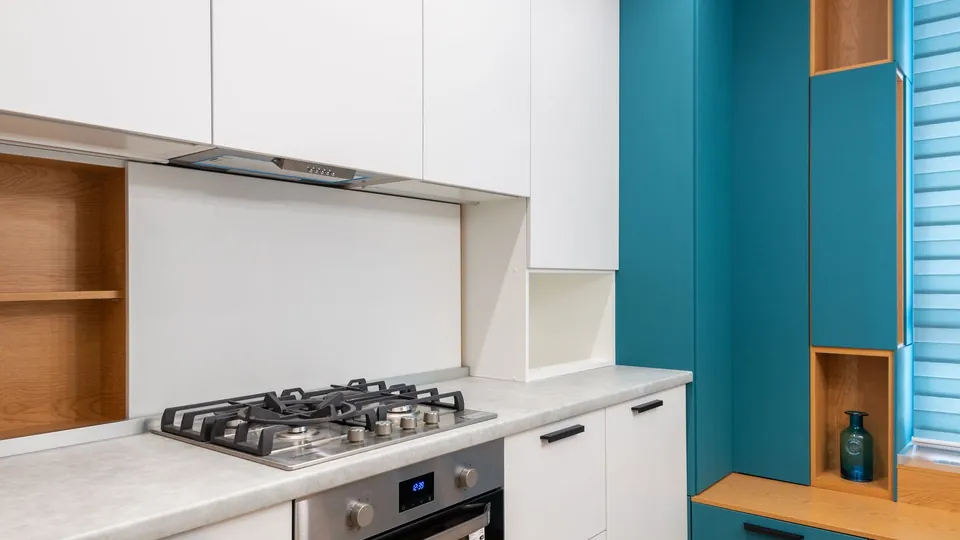
Ranges: what is different from a separate cooktop or oven
If your cooktop and oven are in one freestanding or slide-in unit, a single fault can disrupt both. A failed main control or a loose power connection can leave the burners dead and the oven cold. By contrast, a built-in cooktop and wall oven usually fail independently. If yours is separate, see our pages on cooktop repair and oven repair.
Know your fuel and your connections
| Type | Supply | Typical trouble spots |
|---|---|---|
| Gas range | Natural gas or propane through a flexible connector, plus a 120-volt plug for ignition and controls | Igniters, spark module, clogged burner ports, regulator, oven safety valve |
| Electric range | 240-volt dedicated circuit | Surface elements and sockets, infinite switches, oven elements, breaker |
| Dual fuel | Gas cooktop with an electric oven | Both lists, plus the combined 240-volt and gas connections |
A surprising share of "my range stopped working" calls start after the range was moved: for cleaning, a kitchen remodel, or a move-in. A plug not fully seated, a gas valve left closed, or a bent flexible connector can all mimic a failed part.
The anti-tip bracket matters
Freestanding and slide-in ranges are required by manufacturers to be secured with an anti-tip device so the unit cannot tip forward when someone leans on an open oven door. When a range is pulled out for service or cleaning, the bracket is sometimes left disengaged. Ask the technician to confirm it is installed and engaged after any visit. You can usually check yourself: the rear leveling leg should slot into the bracket on the floor or wall.
Four things to try before you call
- Check power. For an electric range, look at the double breaker. For gas, confirm the plug is seated, because the ignition and clock run on household power.
- Clean the burner caps. Food debris in burner ports and under the caps is the most common reason a gas burner clicks without lighting.
- Remove, dry and reseat. If a pot boiled over and wet the spark module area, give it time to dry fully.
- Test the other half. If the oven works and the burners do not (or the reverse), tell us, because that narrows the fault to one half of the range.
A healthy gas flame is mostly blue. Persistent yellow or orange flames, soot on cookware or a smell of gas are reasons to stop using the burner and get it inspected. Carbon monoxide is odorless, so a working detector near the kitchen is worth having.
Gas conversion and moving
Ranges are built for natural gas or propane. Converting between them is done with a kit and by someone qualified, not by swapping parts at random. If you moved into a home on a different fuel or took a range from one house to another, say so when you call.
When a new range makes more sense
Individual burner switches, igniters and elements are modest repairs. A cracked cooktop glass, rusted oven cavity, or a failed control on an older unit may not be worth fixing. A technician can give you a repair estimate to compare with replacement. The full list of kitchen appliances we cover is on the home page, and you can start a request directly from this one, or begin at Austin ApplianceFix.
Questions people ask
Why do all my gas burners click when I light one?
That is normal when the burner is lighting: the spark module clicks at every burner. Continuous clicking after the flame lights can mean a burner is wet, dirty or not seated correctly.
Why is only one electric burner not heating?
The element may have failed, the receptacle may be burned, or the burner switch may be faulty. Swapping with a working element of the same type (when cool) helps tell which.
Do I need a new gas line for a new range?
Not always, but the connector, shutoff valve and regulator should be appropriate for the range. A qualified professional should handle gas connections.
Does a range need a dedicated circuit?
Electric ranges generally require a dedicated 240-volt circuit sized to the unit’s rating. Confirm with the installation instructions and a licensed electrician if anything seems undersized.
Last updated October 13, 2026. This page offers general information to help you describe and understand a problem; it is not a diagnosis. Always follow your appliance manual and local safety rules.